Guides
Expert tutorials on cutting optimization, material planning, and waste reduction.
Practical cutting optimization guides for woodworkers and pros: how to build a cut list, reduce wood waste, optimize panel nesting and get more parts from every sheet and board. Step-by-step tutorials, from beginner basics to advanced cutting-stock techniques.
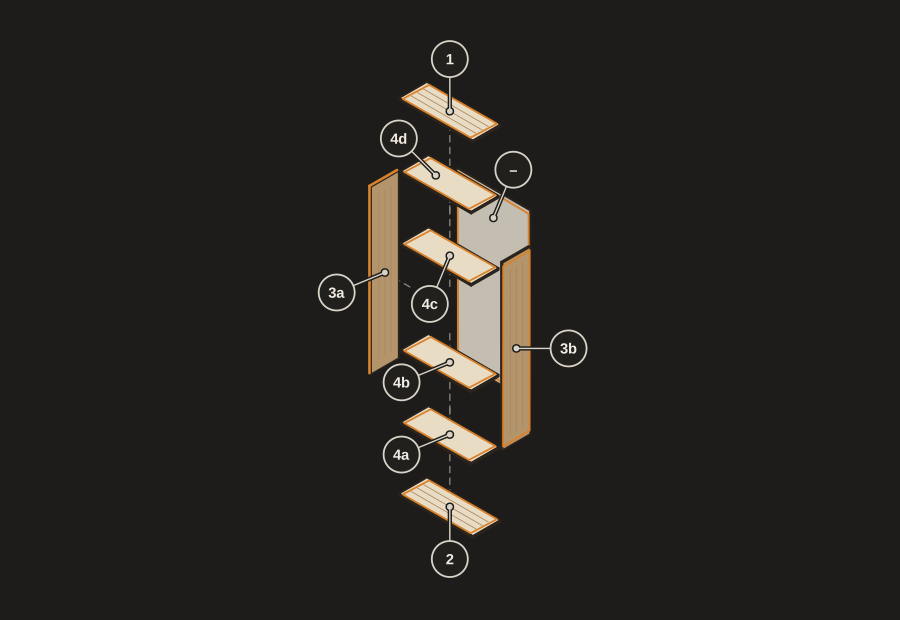
Exploded View Drawing for Furniture: Cut List to Assembly
Make an exploded view of a cabinet or shelf from your cut list: numbered parts, place letters, build steps, a model check and a printable Build Pack.
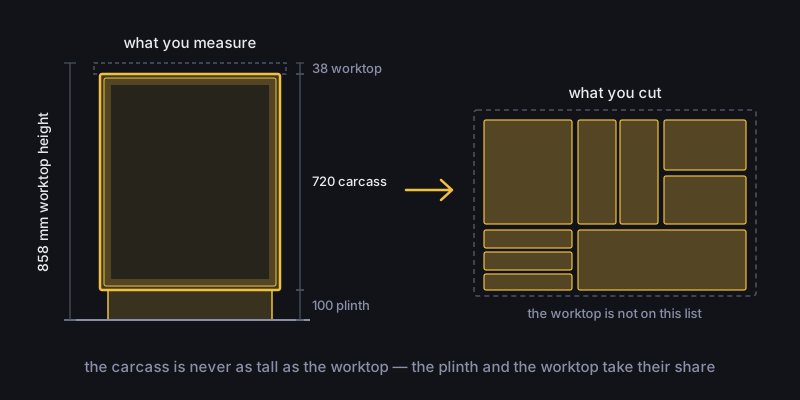
Grain Matching Cabinet Doors and Drawer Fronts
Grain matching cuts a drawer front and the doors under it from one stretch of board, so the figure runs on across the cabinet. Here is how to set it up.
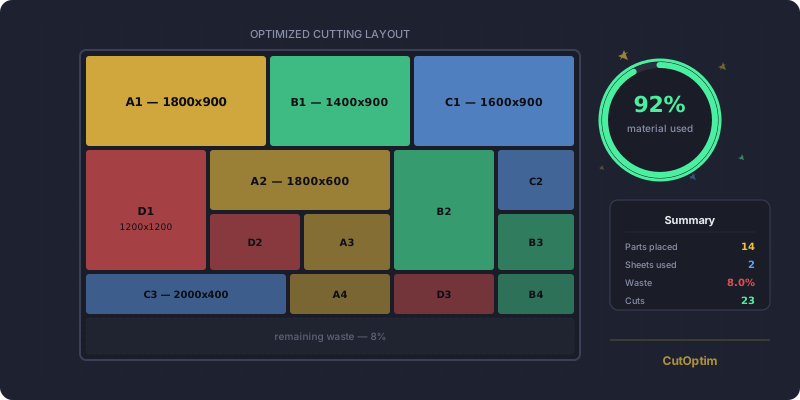
How to Label Furniture Parts for Assembly
Label furniture parts at the saw so assembly goes fast: number and place letter, where the part goes, drilling, work stages and a QR code for the phone.

Panel Saw or CNC Router: One Job, Both Ways
A real furniture job from Kopos Baldai planned as a saw layout and in CNC mode: 3 sheets or 2 at a 9 mm router gap. Plus how often CNC mode saves a sheet.

SketchUp Model to Cutting Plan: Import a .skp File
Import a SketchUp .skp file into CutOptim: it reads the parts, finds the front, flags hardware and gives a cutting plan, an assembly view and a model check.
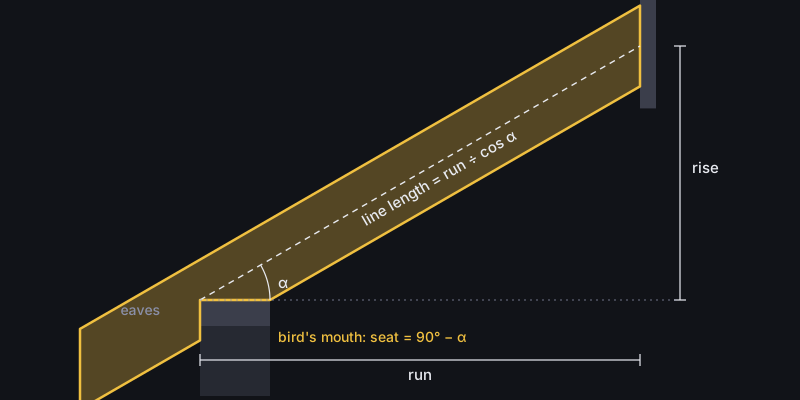
Roof Framing Cut List: From Rafters to a Timber Order
A roof framing cut list turns span, pitch and overhangs into every rafter, batten and ridge piece — then into the fewest stock boards to buy.

DXF for CNC and CAM: Layers, Onion Skin and Sheet Origin
Shape CutOptim's DXF once - parts layer, onion-skin layer, sheet origin, tool gap - so your CAM import needs fewer manual steps. Set it up in Settings.
Nesting Panels for a CNC Router: Free vs Saw Layouts
CNC mode packs rectangular panels freely instead of with saw cuts, so more parts can fit on the stock you have. See when it pays off and how to set it up.
How to Quote Laser-Cut Sheet Metal Parts
Turn a DXF into a quote: sheets and sheet sizes from a nest, the material cost, and machine time from cut length and pierce count. With a measured example.
What Size Sheet Should You Buy?
Compare standard plywood, MDF and chipboard sheet sizes against your own cut list, and see why the size needing the fewest sheets is not always the cheapest.
What Is Nesting? True-Shape Cutting Optimization
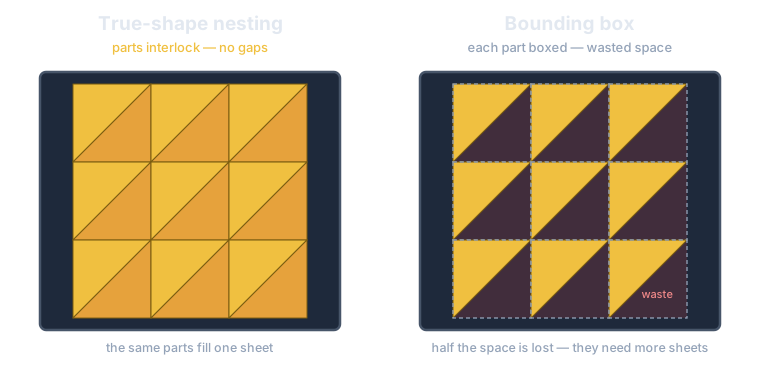
Nesting packs irregular shapes to cut from the fewest sheets — for laser, plasma, waterjet and more. How true-shape nesting works and who uses it.
How to Build a Fence: Posts, Rails & Picket Cut List
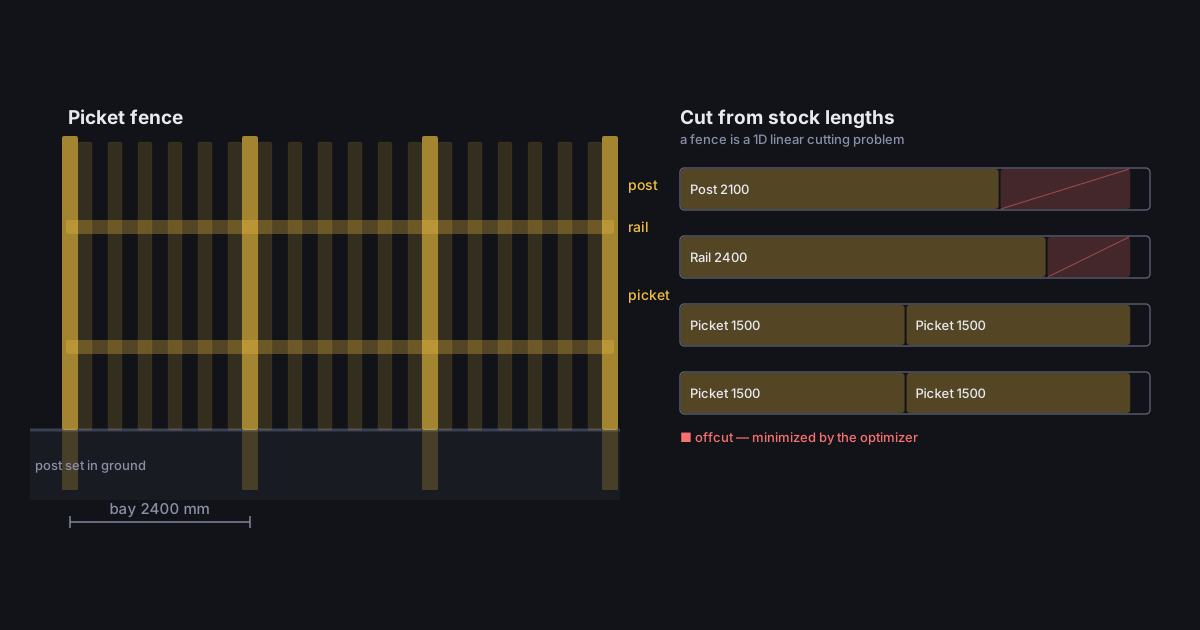
Building a fence means cutting posts, rails, and pickets from stock timber. Here's how to plan the cut list, spacing, and post depth with least waste.
Fast vs Balanced Cutting Optimization: When to Switch
Balanced searches hardest for the densest saw-cuttable plan; Fast skips the one costly step to solve large jobs much faster. Here is exactly when to use each.
Minimize Cost vs Minimize Waste: Which Goal to Pick
Minimize waste packs the least material; Minimize cost packs the cheapest bill, even when that means more material. Here is when each goal saves you money.
Carcass Construction: Which Panel Runs Through?
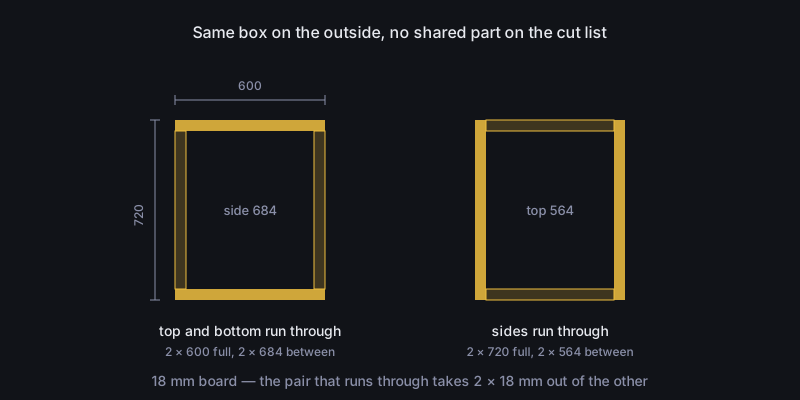
In a carcass, one pair of boards runs the full outer size and the other fits between them — the choice that sets every part size on your cut list.
How to Order Cut-to-Size Panels Without Rework
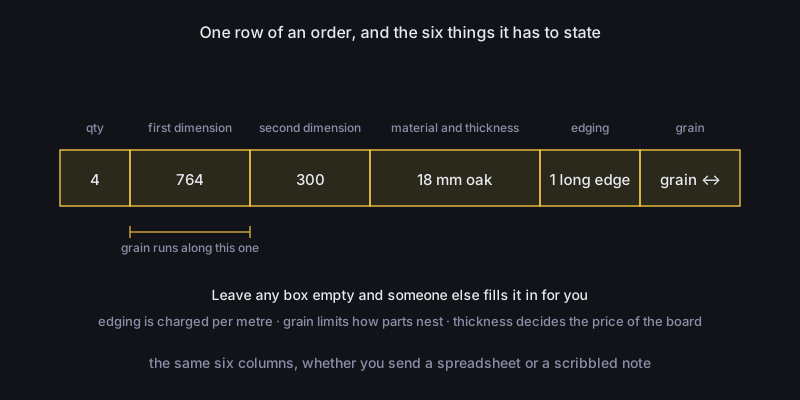
A cut-to-size order is a specification, not a shopping list: every row states quantity, both dimensions, material, edging and grain direction.
How to Cut Glass Sheets with Minimum Waste
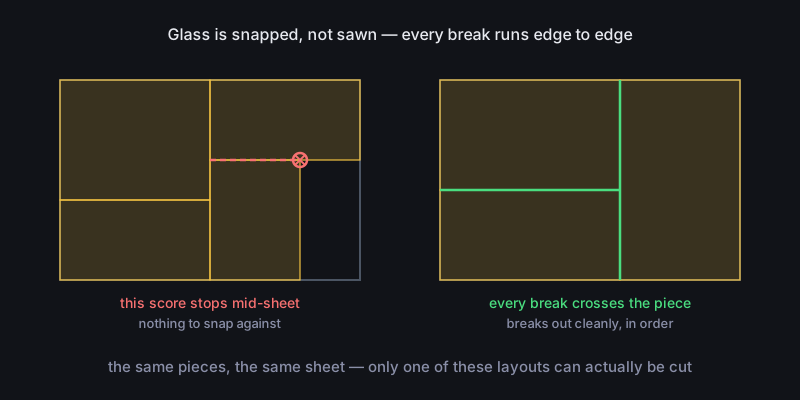
Cutting glass with minimum waste means laying out every piece so each break runs edge to edge, because glass is scored and snapped rather than sawn.
Standard Furniture Dimensions: How Big Should It Be?
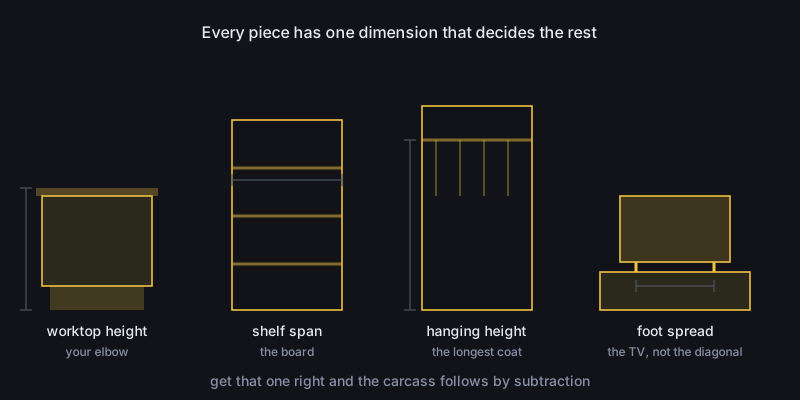
Standard furniture dimensions come from three constraints — the body that uses the piece, the material it is built from, and the space it has to fit.
How Cutting Optimization Actually Works — Methods Compared
Guillotine vs free nesting, greedy heuristics through exact methods, and what yield, cut lines and saw passes really measure — plus what CutOptim runs today.

Metal Cutting Optimization: Bar, Tube, Rebar & Profile
Metal cutting optimization arranges bars, tubes, and profiles across standard stock lengths to cut with the least offcut waste. Here's how it works.

What Is Material Yield (Sheet Utilization)?
Material yield is the share of a stock sheet that becomes finished parts, not scrap. Learn how to calculate sheet utilization and improve it.

1D vs 2D Cutting Optimization: Differences & Algorithms
Understand the key differences between one-dimensional and two-dimensional cutting optimization, when to use each, and the algorithms behind them.

Best Free Cut List Software in 2026: Top Tools Compared
Compare the best free cut list and cutting optimization software in 2026: features, free-tier limits, and which tool fits your workshop or factory.

Cut List Optimizer vs Excel: Why Spreadsheets Fall Short
Compare dedicated cut list optimizers with Excel spreadsheets for material planning. Learn where spreadsheets fail and when you need real optimization.

Cutting Optimization for Beginners: A Getting-Started Guide
New to cutting optimization? This beginner-friendly guide walks you through core concepts, terminology, and your first optimized cut plan step by step.
Guillotine vs Free-Cut Nesting: Choosing the Right Strategy
Deep dive into guillotine and free-cut nesting strategies for sheet material. Learn the constraints, trade-offs, and which approach fits your machinery.
How to Export a Cut Plan to CNC: Formats, Workflow, and Tips
Learn how to export your optimized cut plan to CNC machines. Covers common file formats like DXF and G-code, post-processor setup, and workflow tips.
How to Make a Cut List (Free Template) — Step-by-Step Guide
Step-by-step guide to an accurate cut list (or cutting list) for woodworking, plus a free cut list template you can import straight into the optimizer.

How to Reduce Wood Waste: 7 Strategies for Your Workshop
Discover practical strategies to reduce wood waste in your workshop, from smarter cut planning and offcut management to using optimization software.

What Is the Cutting Stock Problem? A Plain-Language Guide
Learn what the cutting stock problem is, why it matters for manufacturing, and how modern algorithms solve it to minimize material waste and cost.

What Is Kerf Allowance and Why It Matters for Accurate Cuts
Kerf allowance is the wood the saw blade removes with every cut. Move the interactive kerf slider and see how much a job with 20 cuts per sheet loses.