Metal Cutting Optimization: Bar, Tube, Rebar & Profile
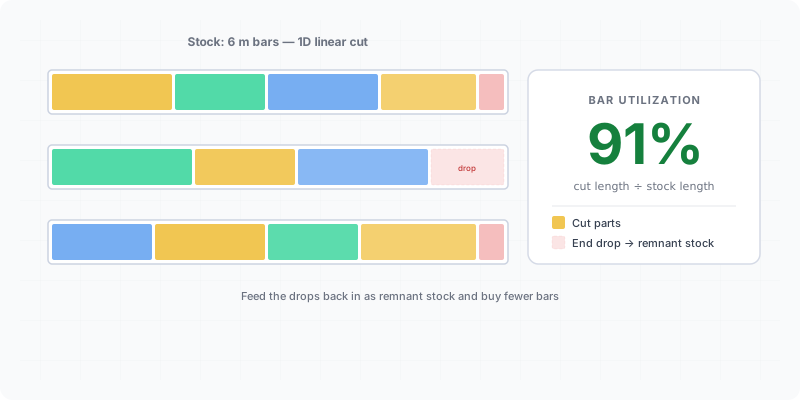
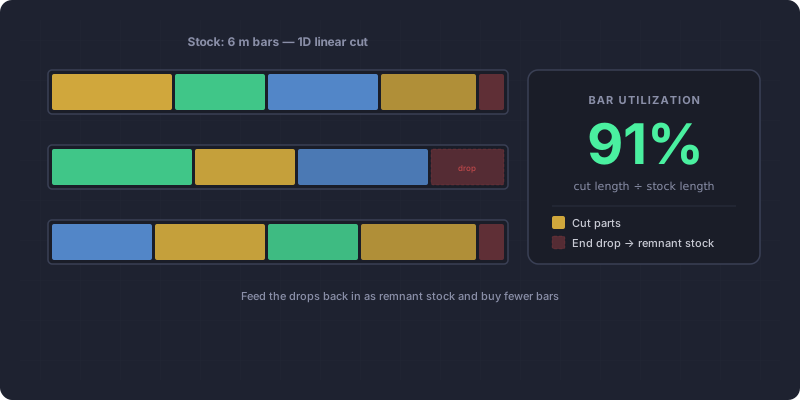
A fabricator cuts a beam-and-rebar schedule from 6 m stock. One shop pulls a fresh bar for every part and lets the drops pile up in a bin; the other feeds its offcuts back in and buys 30% fewer bars for the same job. Same saw, same steel — the difference is how the cuts are arranged across each length. Metal is a one-dimensional cutting problem, and the software that solves it for plywood solves it for steel just as well.
What you’ll learn in this guide:
- What metal cutting optimization is and why it’s a 1D (linear) problem
- How cutting steel differs from cutting wood — kerf, grade grouping, and reusable drops
- The standard stock lengths to optimize against for rebar, sections, and tube
- Where 1D stops and sheet-metal (2D) nesting begins
What Is Metal Cutting Optimization?
Metal cutting optimization arranges your required bars, tubes, and profiles across standard stock lengths so the total offcut waste is as small as possible. It is the one-dimensional cutting-stock problem — the same math used for linear timber — applied to steel stock instead of boards.
Every bar, tube, angle, channel, and length of rebar is a 1D part: it has one dimension that matters for cutting — length. You buy stock in fixed mill lengths, cut your parts from them, and whatever is left at the end of each bar is a drop. The optimizer’s job is to decide which parts come from which bars so you buy the fewest stock lengths and leave the smallest, most reusable drops.
Because it is a 1D problem, a linear cutting optimizer handles metal with no special “metal mode” — you set the stock length, the kerf, and the parts, and the algorithm packs them.
How Is Cutting Metal Different from Cutting Wood?
The 1D math is identical, but four practical things change: the kerf, the absence of grain, what happens to the offcuts, and how you group parts.
- Kerf comes from a metal saw. A bandsaw, cold saw, or abrasive cut-off removes a different width of steel per cut than a wood blade. Enter the real value — see what is kerf allowance.
- No grain direction. Steel has no grain, so parts rotate freely (end for end). That removes one constraint the optimizer has to respect on wood.
- Drops are valuable stock, not scrap. A 900 mm offcut of structural angle is reusable remnant stock and has real scrap value even when it isn’t. Treat drops as inventory, not waste.
- Group by grade and section. You can’t cut an S275 angle and an S355 channel from the same bar. Parts must be grouped by product, size, and steel grade before optimizing.
Two further differences catch people out on the first job, and both concern the ends of the bar. Mill lengths are nominal rather than exact — steel is rolled and cut to a length tolerance, so a bar sold as 6 m can arrive slightly under it, and a plan that fills the nominal length to the last millimetre leaves the final part short. And the ends themselves are rarely usable as delivered: mill ends and stockist cuts are often out of square, dinged in transit, or carry a saw burr, so most shops crop a short piece off the head of each bar before cutting anything to size.
Handle both the same way: give the optimizer the usable length — what you actually receive, minus the trim you actually take — rather than the number on the price list. A linear optimizer that supports a start and end trim per bar does this for you, and it is the difference between a plan that runs and a plan that fails on the last part of every bar.
What Are Standard Metal Stock Lengths?
Optimize against the lengths your supplier actually delivers, not a round number. Getting this wrong produces a plan you can’t buy.
| Product | Typical stock lengths | Notes |
|---|---|---|
| Reinforcing bar (rebar) | 6 m and 12 m (EU) | Per EN 10080; US mills supply 20 / 40 / 60 ft |
| Hot-rolled sections (angle, channel, beam) | 6–12 m mill lengths | Per EN 10025; longer lengths by arrangement |
| Hollow sections (RHS / SHS / tube) | 6 m (often 6.4 m) | Varies by supplier and wall thickness |
| Round and flat bar | 3–6 m | Stockholder-dependent |
These are typical figures — your stockholder’s lengths may differ, so confirm before you optimize. The point is that the stock length is an input you must set correctly: the same cutting list optimized against 6 m bars and against 12 m bars produces two different plans, and only one matches what’s on your delivery.
How Do You Minimize Bar & Tube Waste?
You cut metal waste by grouping correctly, entering an accurate kerf, matching real stock lengths, and reusing drops — then letting the optimizer arrange the rest.
Group by section, size, and grade
You can only cut same-profile, same-grade bars from one stock length. Sort your list by product (rebar, angle, RHS), then by size and steel grade, and optimize each group on its own stock — mixing them produces a plan you can’t run.
Enter your real saw kerf
A bandsaw, cold saw, and abrasive cut-off each remove a different width of metal per cut. Measure your kerf and enter it so the optimizer accounts for the metal lost on every cut.
Set your actual stock lengths
Match the mill lengths your supplier delivers — commonly 6 m and 12 m for rebar and sections. Optimizing against a stock length you can’t buy gives a plan you can’t run.
Feed usable drops back in as remnant stock
Steel offcuts are valuable and fully reusable. Save the drops on your rack to the Offcut inventory: with Use off-cuts automatically on, the optimizer cuts from them before it reaches for a full bar — the cheapest bar is the one you already own.
Optimize, then compare the bar count
Run the 1D optimizer and read how many stock bars it needs. Adjust an input, re-run, and compare — trimming even one bar per batch adds up fast across a production run.
Bar stock waste on the same schedule — before vs after optimization
The visual shows offcut waste dropping from 35% to 9% on the same cut list (illustrative figures — your result depends on part-length mix). On long production runs of repeated lengths, a good arrangement routinely saves whole bars.
What Kerf Should You Use for Metal Saws?
Kerf on metal is the width of steel each cut turns into chips or dust, and it varies more by saw type than most operators expect.
| Metal saw | Typical kerf | Notes |
|---|---|---|
| Bandsaw (bimetal) | 1.1–1.6 mm | Narrow kerf, low waste, clean square cut |
| Cold saw (circular) | 2–2.5 mm | Toothed blade, very accurate, coolant-fed |
| Abrasive cut-off | 2.5–3 mm | Fast, but wider kerf and more heat |
| Plasma | 1.5–4 mm | Kerf widens with material thickness and amperage |
On a schedule with dozens of cuts, kerf adds up: at 3 mm per cut, forty cuts remove 120 mm of steel — a fifth of a metre gone to chips. Enter the real kerf for your saw so the plan you get is the plan you can actually cut. Measure it from a test cut rather than trusting a catalogue figure.
There is a mechanical reason the catalogue figure drifts on a bandsaw. The cut is not as wide as the blade body; it is as wide as the blade’s set — the sideways offset of the teeth that clears the body through the material. Set wears down with use, so an old blade cuts a narrower kerf than a new one of the same specification, and it starts wandering off square as it goes. A shop that re-measures kerf at each blade change works from an honest number; one that entered the spec sheet value years ago is planning against a blade it no longer owns.
Common Mistakes When Optimizing Metal
Mixing grades or sections in one optimization run. An S275 flat and an S355 angle can’t share a bar, and neither can two different sizes. A run that mixes them returns a layout you physically can’t produce. Sort into groups first, then optimize each on its own stock.
Optimizing against a stock length you can’t buy. Entering “6.5 m” because it’s convenient, when your supplier delivers 6 m, produces a plan that falls apart at the saw. Set the stock length to the real mill length on your delivery note.
Treating drops as scrap. Sending every offcut to the skip ignores paid-for material. Save usable drops to the Offcut inventory and let the optimizer consume them first — steel is expensive, and a bar you already own costs nothing to cut.
Planning to the nominal length and forgetting the bar ends. A bar that arrives at 6 m minus its length tolerance, then loses a crop off a damaged end, is not 6000 mm of usable steel. Optimize against usable length, or the last part on every bar comes up short — and you discover it at the saw, one bar at a time, after the material is already committed.
When 1D Isn’t Enough: Sheet and Plate
One-dimensional optimization covers bars, tubes, profiles, and rebar — anything where length is the only dimension that matters. It’s the wrong tool for flat stock.
Cutting parts from steel plate or sheet is a two-dimensional problem: rectangular blanks belong in 2D panel optimization, and irregular profiles cut by plasma, laser, or waterjet need true shape nesting, a different class of software entirely. If your job is a mix — bar stock plus some plate brackets — split it: optimize the linear parts as 1D and the flat parts as 2D. See 1D vs 2D cutting optimization for where the line falls.
Turn your bar and tube cutting list into a buy-fewer-bars plan.
Set your stock lengths and kerf, paste your part list — the 1D optimizer does the rest. No signup required.
Optimize metal cuts freeFrequently asked questions
What is metal cutting optimization?
Can you use cutting optimization software for metal?
What are standard rebar and steel stock lengths?
How is cutting metal different from cutting wood?
What kerf should I use for a metal bandsaw?
Does CutOptim do sheet-metal nesting?
Related
Ready to optimize your cuts?
2 free runs without an account, then 3 a month with a free account
Open App